 11
11
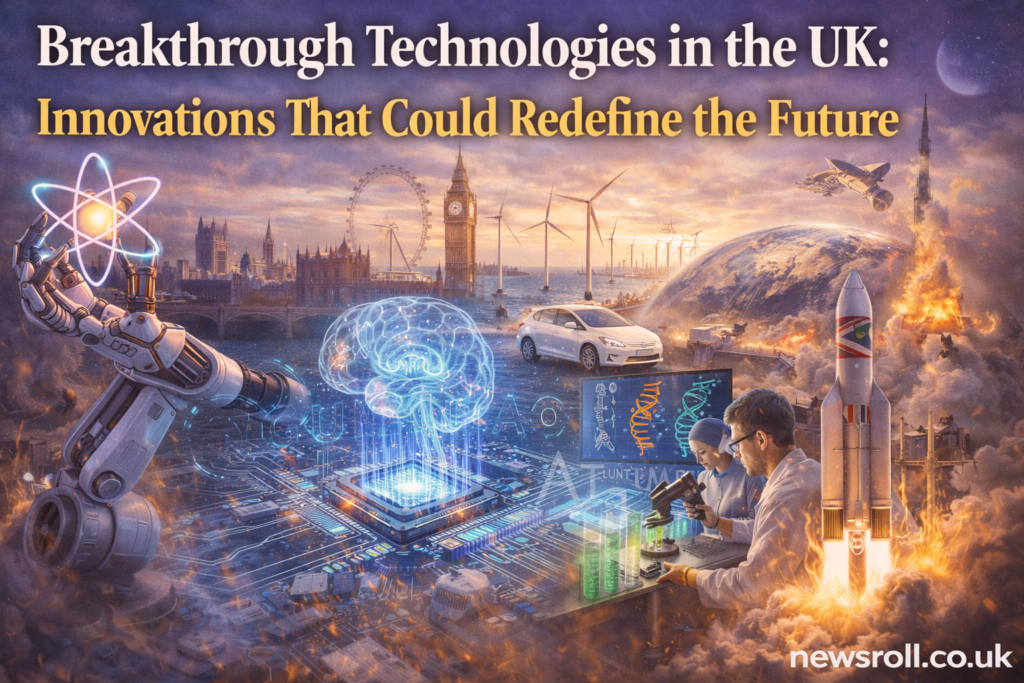
The United Kingdom is rapidly strengthening its position as a global hub for innovation, with a new wave of technologies emerging from research institutions, startups, and private industry. From artificial intelligence and quantum computing to green energy and biotechnology, these developments have the potential to reshape entire sectors and redefine the country’s economic future.
One of the most promising areas is artificial intelligence. UK-based companies and research centres are at the forefront of developing advanced AI systems capable of transforming industries such as healthcare, finance, and logistics. In medicine, AI is already being used to detect diseases earlier and more accurately, while in finance, it is helping institutions manage risk and detect fraud in real time. The UK government has also committed to positioning the country as a leader in AI regulation, aiming to balance innovation with ethical oversight.
Quantum computing is another field where the UK is making significant strides. Universities such as Oxford and Cambridge, along with a growing number of startups, are working on next-generation computing systems that could solve problems far beyond the reach of today’s technology. Applications range from drug discovery and materials science to cybersecurity, where quantum encryption could fundamentally change how data is protected.
In the energy sector, the UK is investing heavily in green technologies. Offshore wind continues to expand, but newer innovations—such as advanced battery storage systems and hydrogen-based energy solutions—are gaining momentum. These technologies are essential for achieving long-term climate goals and reducing dependence on fossil fuels, particularly in the context of global energy uncertainty.
Biotechnology is also emerging as a key area of growth. British researchers are developing cutting-edge treatments, including gene therapies and personalised medicine approaches tailored to individual patients. These advancements could significantly improve outcomes for conditions that were previously difficult or impossible to treat.
Meanwhile, the UK’s space and aerospace sectors are evolving rapidly. New satellite technologies and small-launch systems are enabling more efficient communication, earth observation, and navigation capabilities. These developments not only have commercial applications but also play a role in national security and environmental monitoring.
Despite this progress, challenges remain. Scaling innovation from the laboratory to the market requires sustained investment, supportive regulation, and access to skilled talent. Competition from other global technology hubs is intense, and maintaining a leading position will depend on the UK’s ability to attract and retain both capital and expertise.
Nevertheless, the current trajectory suggests a strong foundation for future growth. The convergence of multiple advanced technologies—AI, quantum computing, clean energy, and biotech—positions the UK at the centre of a new technological wave.
As these innovations move from development to real-world application, their impact could be profound, not only transforming industries but also reshaping everyday life. In this sense, the UK is not just participating in the next phase of technological evolution—it is helping to define it.