
 11
11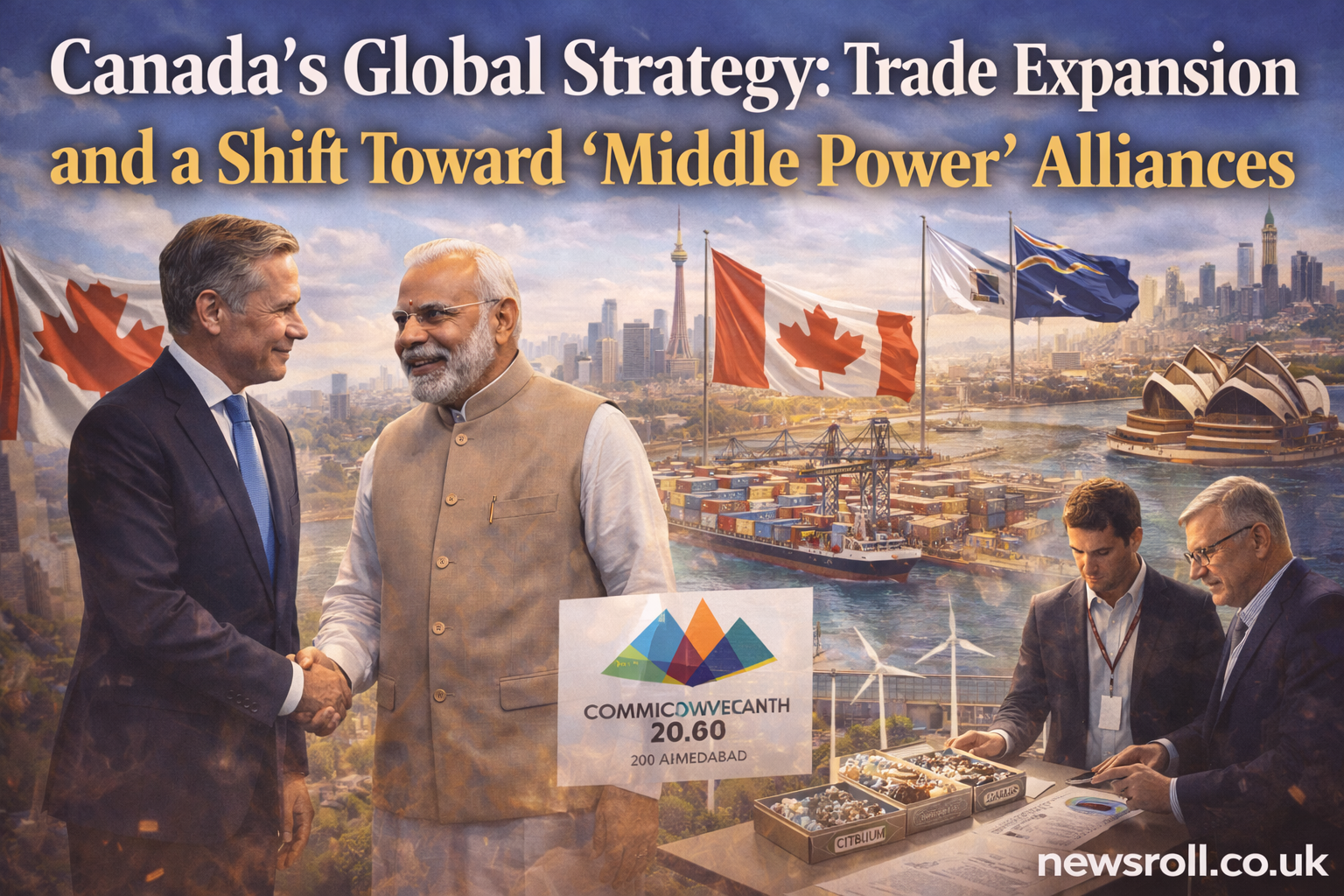
Canada is redefining its position within the Commonwealth and the wider global order, as Prime Minister Mark Carney pursues a strategy focused on diversifying trade and reducing reliance on traditional partners such as the United States.
Recent diplomatic efforts have seen Canada intensify engagement with key Indo-Pacific partners, including India and Australia. Carney’s visits are aimed at strengthening economic ties, expanding cooperation in energy and technology, and building new strategic alliances among so-called “middle powers.” (Reuters)
Central to this approach is the negotiation of new trade agreements and investment partnerships. Talks with India, for example, are expected to lead to a comprehensive trade deal, while discussions with Australia focus on defence cooperation, critical minerals, and technological collaboration. (pm.gc.ca)
This shift reflects a broader recalibration of Canada’s foreign policy. In a more fragmented and uncertain global environment, Ottawa is seeking to build a network of partnerships that can provide economic resilience and geopolitical flexibility. The strategy also aligns with wider Commonwealth dynamics, where member states are increasingly looking beyond traditional alliances.
At the same time, the approach is not without risks. Balancing relationships with diverse partners—some with competing geopolitical interests—requires careful diplomacy. Domestically, questions remain about how quickly such partnerships can translate into tangible economic benefits.
Nevertheless, Canada’s proactive stance signals a clear intention to play a more independent and influential role on the global stage. Within the Commonwealth context, it underscores a growing trend: member states are no longer just linked by history, but by evolving strategic interests in a rapidly changing world.