 11
11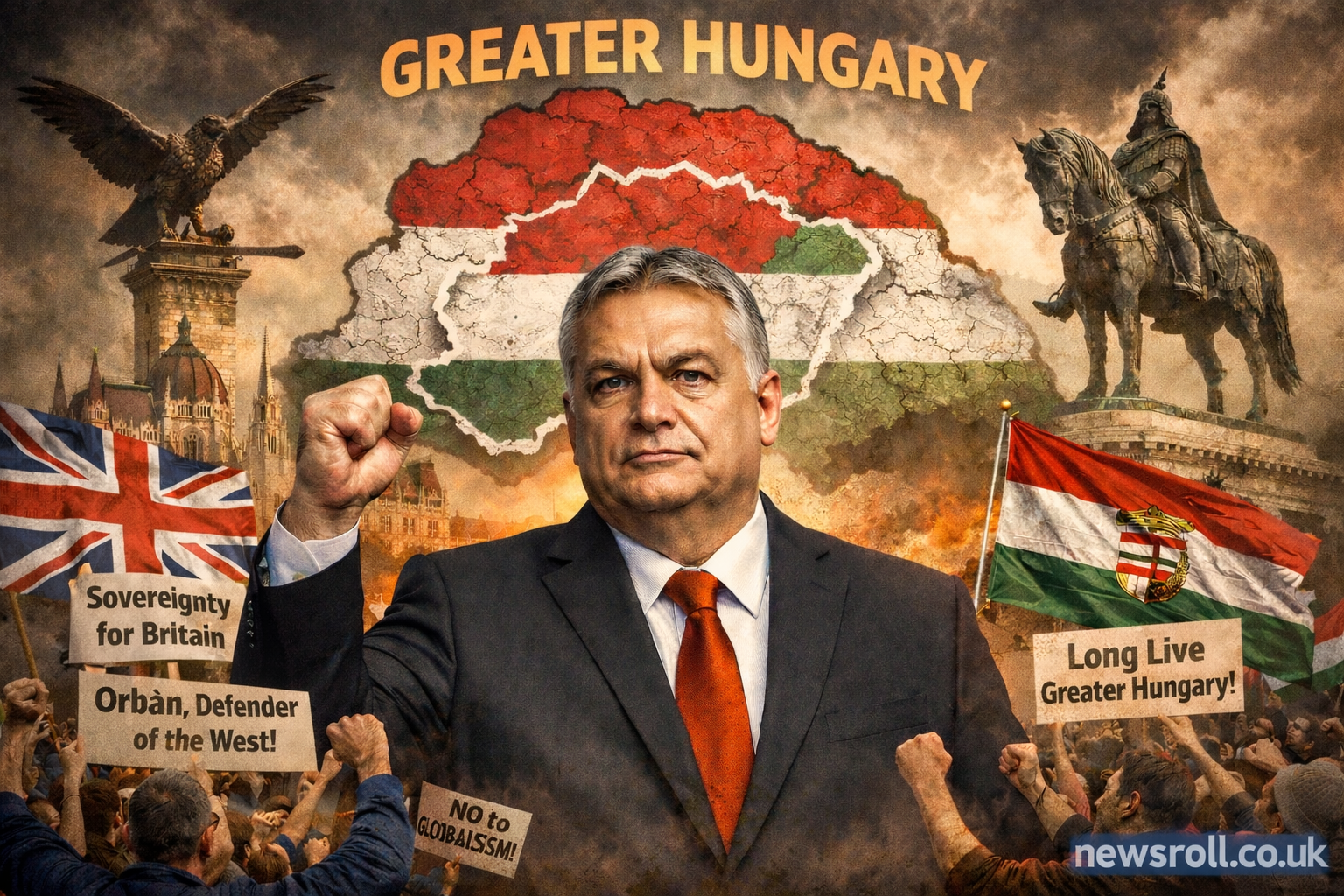
In recent years, the idea of “sovereignty” has become one of the most powerful political slogans in the United Kingdom. It was the driving force behind Brexit, a rallying cry that promised control, independence, and a renewed sense of national direction. But as with many political concepts that gain mass traction, sovereignty has increasingly been diluted, rebranded, and, in some cases, weaponised.
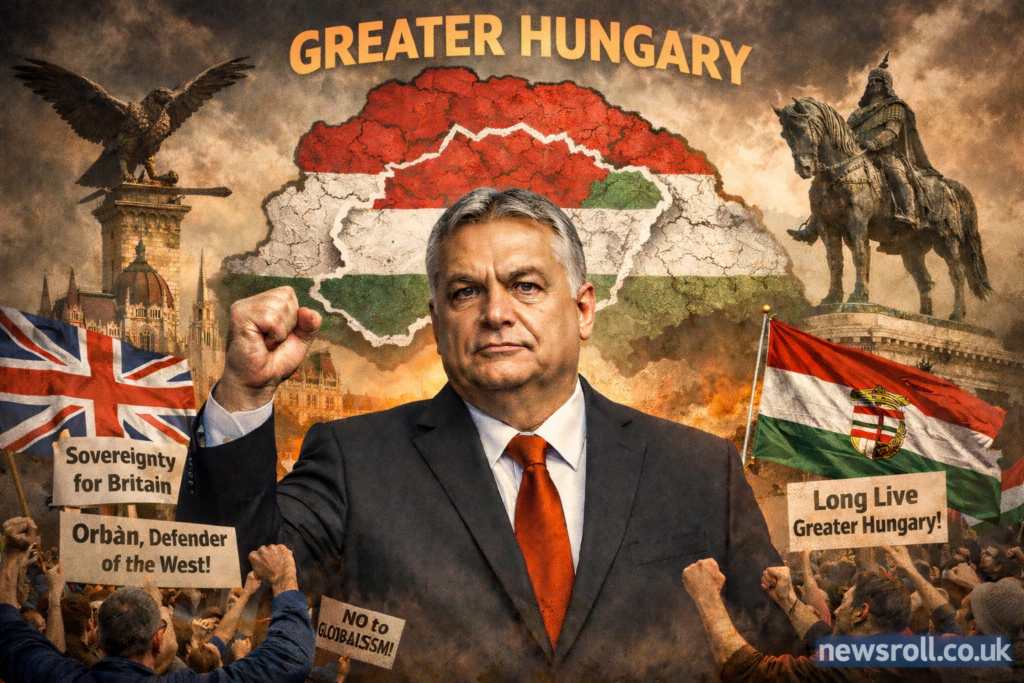
A particularly revealing trend has emerged online: a growing number of British “sovereigntist” voices openly admiring and promoting Viktor Orbán as a model leader. Across social media platforms, narratives praising the Hungarian prime minister as a defender of Western civilisation, a guardian of traditional values, and a bulwark against globalism have become increasingly common.
At first glance, this might seem like ideological alignment. But a closer look exposes a deeper contradiction—one that mirrors similar dynamics seen elsewhere in Europe.
Because the central question remains: what does sovereignty actually mean if it leads you to idolise the political model of another country, without examining its consequences?
Brexit was, fundamentally, about reclaiming decision-making power. It was about removing external influence and restoring democratic accountability within the UK. Yet, paradoxically, parts of the same movement now elevate a foreign leader as an example to follow, often without critical scrutiny.
This is not sovereignty. It is substitution.
Orbán’s Hungary is frequently portrayed in British online discourse as a success story—a nation that “stood up” to Brussels, defended its borders, and rejected liberal social policies. But this narrative omits crucial facts.
Over the past decade and a half, Hungary has undergone significant democratic backsliding. Independent institutions have been weakened, media pluralism has declined, and political power has become increasingly centralised. International watchdogs and EU institutions have repeatedly raised concerns about rule-of-law violations and systemic corruption.
These concerns are not abstract.
Hungary has faced:
Far from representing a stable “sovereign success,” Hungary has, in many respects, become more dependent on political patronage networks and less resilient institutionally.
For a British audience, this should raise immediate red flags.
The Brexit argument was built on the premise that sovereignty strengthens accountability. That power closer to the people leads to better governance. Yet the Orbán model demonstrates the opposite risk: that sovereignty, when stripped of institutional safeguards, can enable the concentration of power rather than its distribution.
And still, the online narratives persist.
Why?
Part of the answer lies in the mechanics of modern information ecosystems. Social media rewards simplicity, emotion, and conflict. Messages that frame politics as a binary struggle—patriots versus globalists, tradition versus decay—spread faster than nuanced analysis.
Orbán fits neatly into this framework. He is easy to package, easy to mythologise, and easy to deploy as a symbol.
But symbols are not reality.
Another factor is frustration. A segment of the British public feels that Brexit has not delivered the clarity or transformation that was promised. Economic pressures, political instability, and unresolved structural challenges have created a vacuum—one that is increasingly filled with external “examples” of what a more decisive leadership might look like.
In that vacuum, figures like Orbán become projections rather than subjects of critical evaluation.
Yet this projection comes at a cost.
Because in adopting simplified narratives about foreign political models, the UK risks repeating the very mistake Brexit sought to correct: outsourcing judgment.
Sovereignty, if it is to mean anything, must involve the capacity to assess reality honestly—even when that reality contradicts preferred narratives. It requires distinguishing between rhetoric and outcomes, between image and evidence.
The admiration for Orbán within certain British circles is not, in itself, the problem. Political systems can and should be compared. The problem arises when admiration replaces analysis, when complexity is ignored, and when inconvenient facts are deliberately excluded.
At that point, sovereignty stops being a principle and becomes a slogan.
And slogans, no matter how powerful, do not govern countries. They only shape perceptions—often just long enough for reality to catch up.