 11
11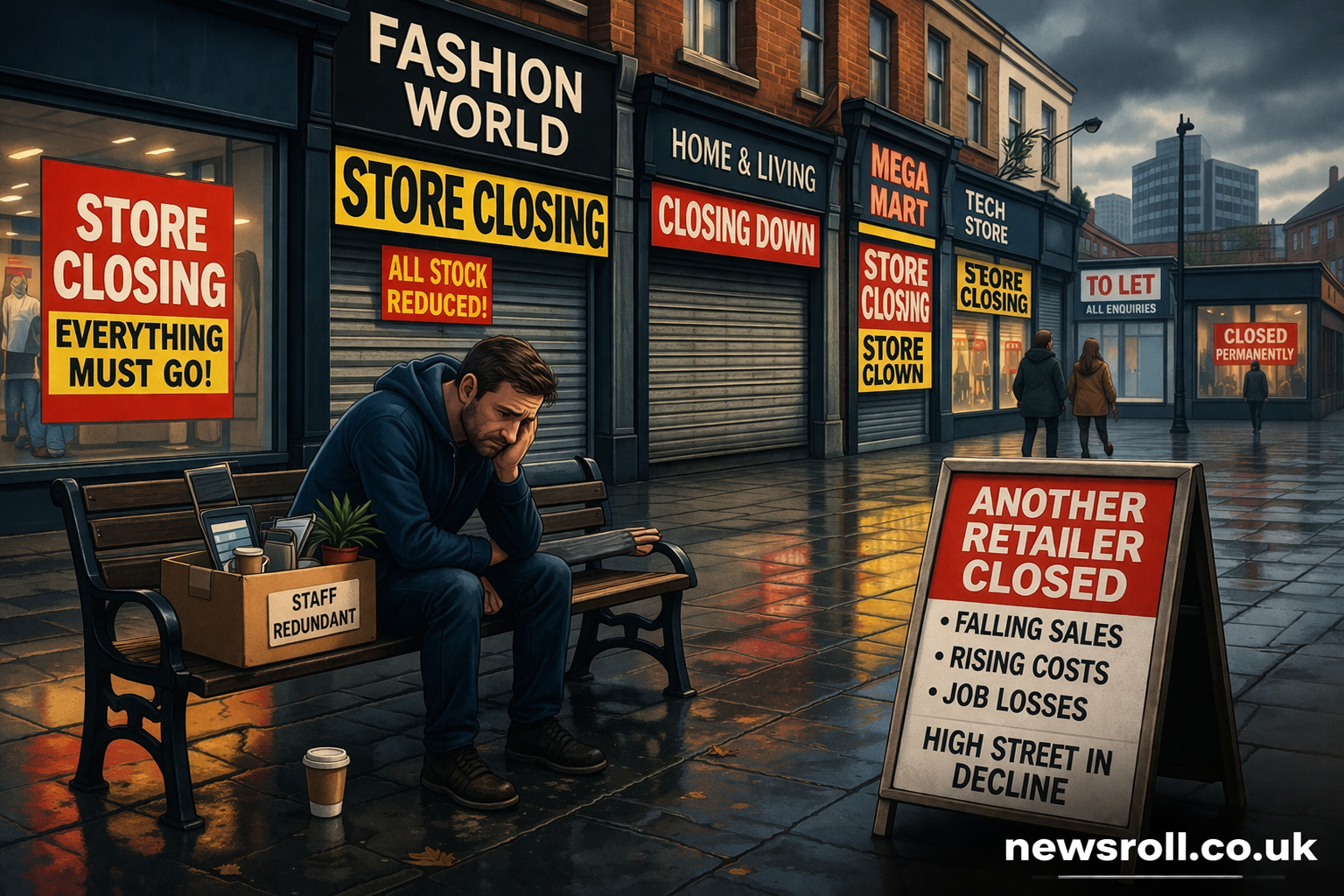
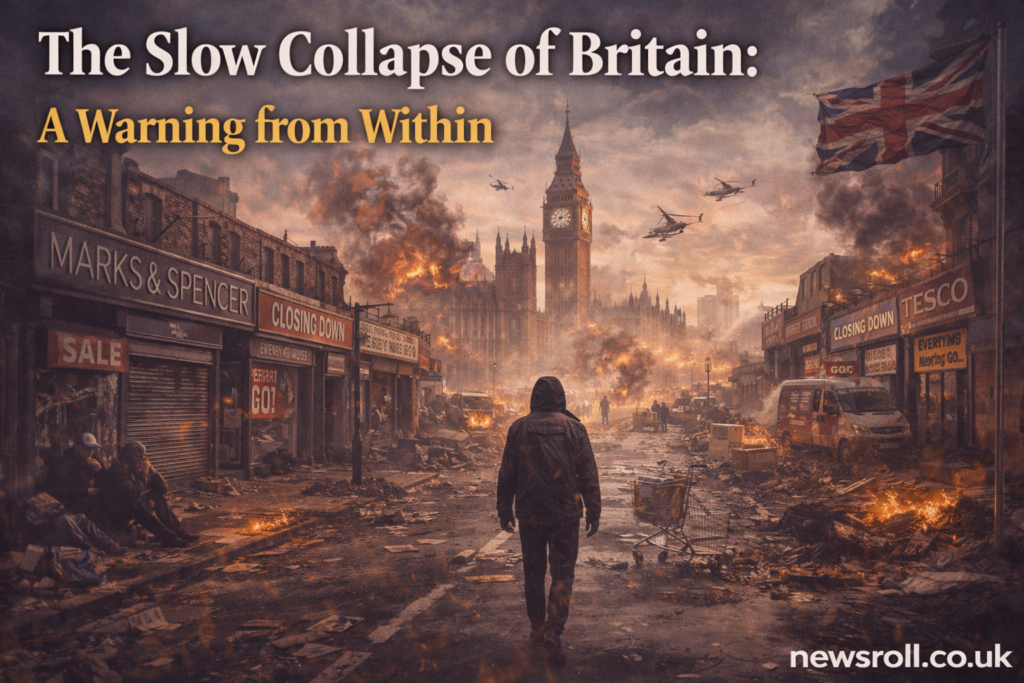
Across the United Kingdom, the traditional high street is undergoing a slow but undeniable collapse. Each year, thousands of retail stores shut their doors, not temporarily, but permanently. What was once the backbone of local economies — bustling shopping streets filled with recognisable brands — is now increasingly defined by empty units, “To Let” signs, and declining footfall.
The numbers paint a stark picture. In 2024 alone, more than 12,800 stores closed across the UK, with only around 9,000 openings, resulting in a significant net loss. (The Guardian) Even more striking, during the first half of 2024, an average of 38 stores closed every single day, while only 25 opened. (K2 Partners) This imbalance reflects a structural shift rather than a temporary downturn.
At the same time, consumer behaviour has changed dramatically. Footfall remains 15–20% below pre-pandemic levels, while online retail now accounts for roughly 28% of total sales. (K2 Partners) Combined with the ongoing cost-of-living crisis, this has created a perfect storm for brick-and-mortar retailers.
The scale of closures is no longer limited to small independent shops. Major brands — some of them household names — are either shrinking drastically or exiting the market altogether.
Among the most notable examples:
This is not a short-term correction. It is a widespread contraction of the physical retail sector.
At the core of the crisis lies a simple issue: people are spending less. Inflation, rising energy bills, and stagnant wage growth have eroded disposable income. Even when retail sales show short-term increases, the broader trend remains fragile.
Recent data shows UK retail sales fell again in early 2026, reflecting weakening consumer confidence. (Reuters) Households are increasingly cautious, prioritising essentials over discretionary spending — a direct blow to fashion, homeware, and non-essential retail sectors.
When consumers cut back, retailers suffer immediately. Margins shrink, costs remain high, and profitability becomes increasingly difficult to sustain.
Beyond consumer behaviour, many retailers point directly to government policy as a contributing factor.
Recent fiscal measures — including higher business rates, increased National Insurance contributions, and tax rises — have significantly increased operating costs. (K2 Partners) For large retailers, these changes amount to hundreds of millions of pounds in additional annual expenses.
In some sectors, the impact has been immediate. The closure of hundreds of betting shops by William Hill, for example, was directly linked to sharp tax increases imposed by the Labour government, which industry leaders described as “highly damaging”. (The Sun)
While these policies are often framed as socially responsible or fiscally necessary, their real-world effect is clear: reduced profitability, reduced investment, and ultimately, fewer jobs.
Behind every store closure lies a human story. Employees who have worked for years — sometimes decades — suddenly find themselves without income, often in areas where alternative employment is limited.
In 2024 alone, over 55,000 retail jobs were affected by store closures, with tens of thousands more at risk in ongoing restructurings. (Research Briefings) Across the broader economy, retail job losses exceeded 130,000 positions, reflecting the scale of the crisis. (The Sun)
For many of those affected, the transition is not straightforward. Skills developed in retail do not always translate easily into other sectors, and in towns already struggling economically, new opportunities are scarce.
This creates a ripple effect: rising unemployment, reduced local spending, and further pressure on already fragile communities.
It would be easy to attribute these closures solely to the rise of e-commerce. And while online shopping has undoubtedly played a major role, the reality is more complex.
The UK retail sector is being reshaped by a combination of forces: declining purchasing power, rising operational costs, shifting consumer habits, and policy decisions that increase the financial burden on businesses.
What is emerging is not simply a transition, but a transformation. Physical retail is no longer the default — it is becoming selective, concentrated, and, in many cases, unsustainable without significant restructuring.
As more brands reassess their presence and profitability, the trend is likely to continue. More closures, more consolidation, and more job losses are not predictions — they are already happening.
And for ordinary people — both workers and consumers — the consequences are becoming impossible to ignore: fewer jobs, fewer local services, and high streets that increasingly reflect not growth, but gradual decline.