
 11
11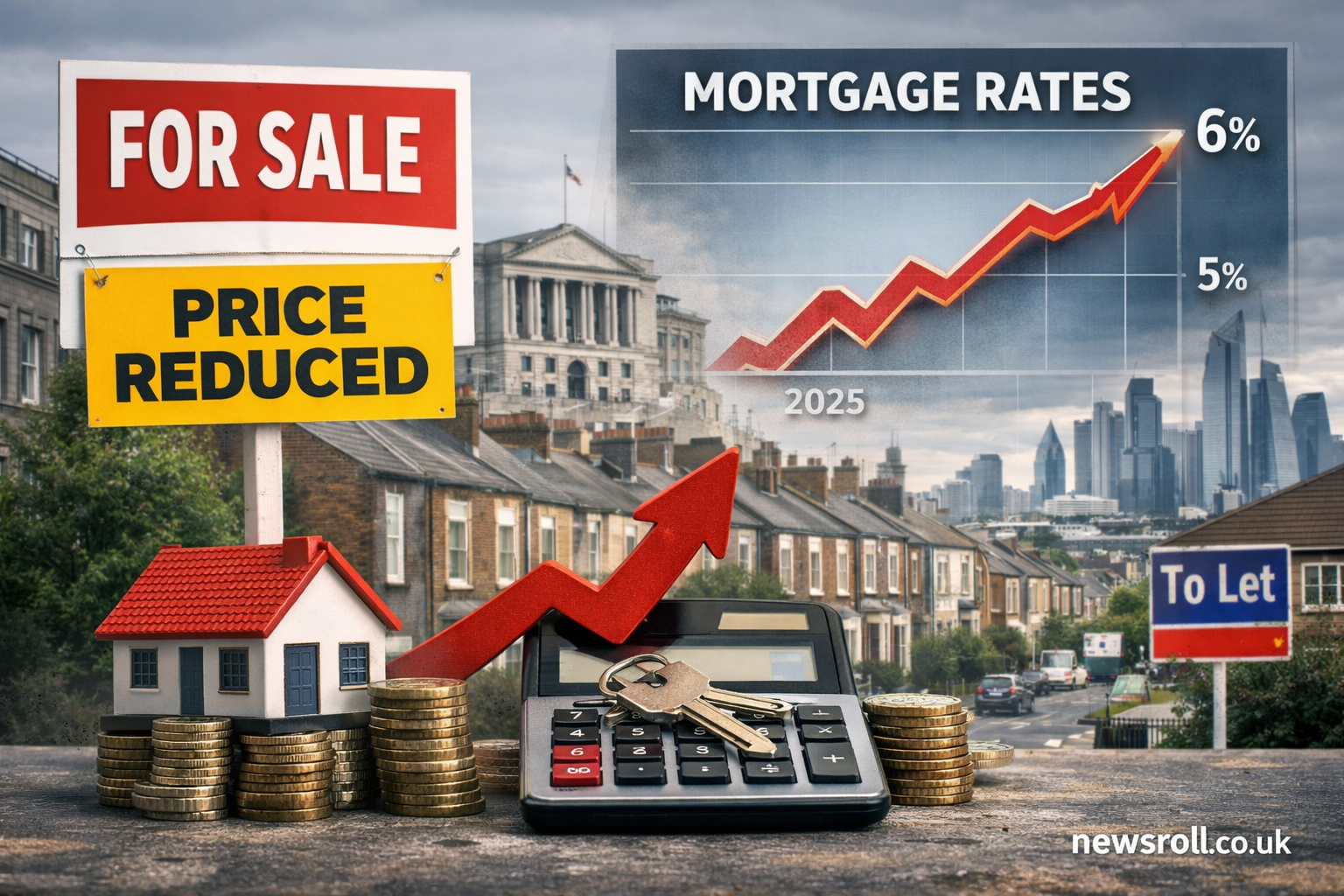
The UK housing crisis has intensified in late March 2026, driven by a combination of rising borrowing costs, structural supply shortages, and worsening affordability indicators. Recent data from 26–27 March highlights a market under renewed stress, with both homeowners and renters facing increasing financial pressure.
Mortgage market instability has become a central feature of the current crisis. According to Reuters, average two-year fixed mortgage rates climbed to around 5.51% in late March, while five-year rates reached approximately 5.52%, reflecting a sharp increase in borrowing costs following global economic tensions. Over 1,780 mortgage products—around 21% of the market—have been withdrawn as lenders react to volatility, marking disruption levels not seen since the pandemic or the 2022 mini-budget crisis. (Reuters)
Additional reporting on 27 March indicates mortgage rates have continued rising, with the average two-year fix reaching about 5.75%, a 19-month high. This increase is linked to expectations that the Bank of England may keep interest rates higher for longer due to inflationary pressures, particularly from energy markets. (The Guardian)
Affordability remains one of the most acute problems. New data shows that rents now consume approximately 36.1% of tenants’ average earnings—the highest level on record—highlighting a severe affordability crisis in the private rental sector. This trend is closely tied to a long-term decline in social housing supply, which has fallen from 31% of households in 1981 to just 17% today. (Landlord Today)
The shortage of affordable housing is also reflected in broader structural data. The 2026 UK Housing Review reports that there are around 1.6 million fewer affordable social homes than in 1981, intensifying competition in the private rental market and pushing rents higher relative to incomes. (Sky News)
House price dynamics show stagnation rather than recovery. Official figures indicate that UK house prices rose by only 1.3% annually to January 2026, while monthly prices fell by 0.3%, suggesting weakening demand and reduced buyer confidence. (Today’s Conveyancer)
At the same time, affordability barriers for first-time buyers are worsening. In 2025, the median home price in England was approximately £300,000—around 7.6 times the median income of £39,300—illustrating the scale of the affordability gap. (Pegasus Group)
Additional financial pressures are limiting access to homeownership. A Barclays report published this week found that individuals with student debt save nearly £2,000 less per year for housing deposits compared to those without debt, with 41% of borrowers stating that student loans prevent them from buying a home. (The Guardian)
Supply constraints remain a core structural issue. Although the government has announced plans for seven new towns delivering up to 191,000 homes, construction timelines extend into the late 2020s, meaning short-term relief is limited. (The Sun)
Meanwhile, policy delays are exacerbating long-term risks. The postponement of new low-carbon housing standards to 2028 means many new homes will continue to rely on gas heating, exposing households to higher energy costs and undermining affordability improvements. (The Guardian)
Environmental risks are also emerging as a future driver of instability. Estimates suggest that up to 430,000 UK households could become “mortgage prisoners” by 2050 due to flood risk, potentially reducing property values by more than 20% in affected areas and limiting access to insurance and financing. (The Times)
Overall, the UK housing crisis in March 2026 reflects a convergence of cyclical and structural pressures: rising interest rates are suppressing demand, supply shortages are pushing rents higher, and affordability remains historically stretched. Without significant increases in housing supply and sustained improvements in economic conditions, these pressures are likely to persist in the near term.
Sources (with links):