 11
11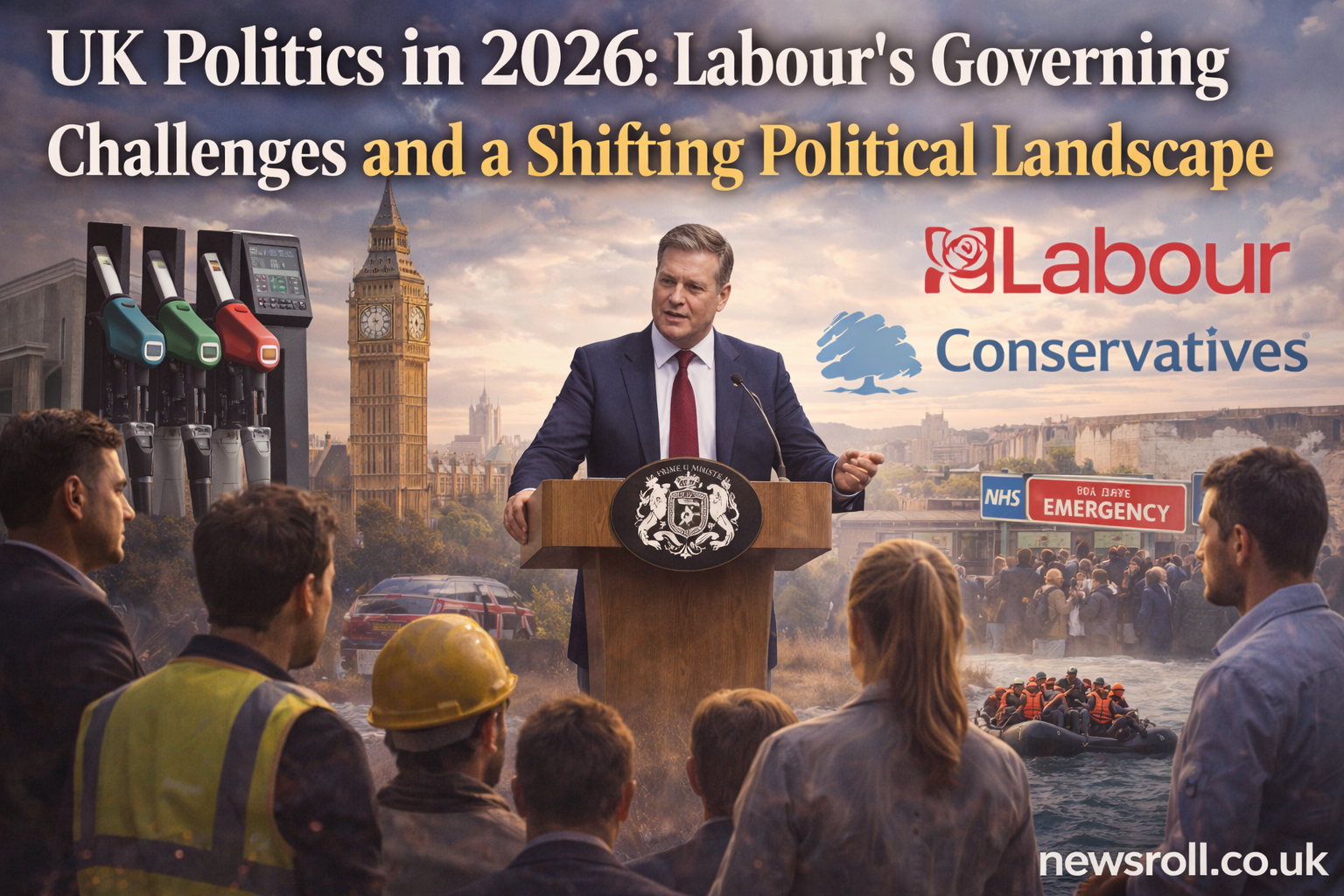
The political landscape in the United Kingdom in 2026 is defined by transition, pressure, and recalibration. Following Labour’s return to power after the 2024 general election, the government led by Prime Minister Keir Starmer is now entering a critical phase where expectations of change are being tested against economic realities and institutional constraints.
One of the central challenges facing the Labour government is economic management. While inflation has eased compared to its peak in previous years, the cost-of-living crisis continues to affect households across the country. Energy prices remain volatile, partly influenced by ongoing geopolitical tensions, while wage growth has struggled to keep pace with long-term price increases. The government has committed to fiscal discipline, but this has limited its ability to introduce large-scale public spending initiatives, leading to criticism from both opposition parties and parts of its own support base.
Public services remain another major pressure point. The National Health Service (NHS) continues to face staff shortages, long waiting times, and structural funding challenges. Labour has pledged reform and modernization, including investment in digital systems and workforce expansion, but progress has been gradual. Similarly, the education sector is grappling with funding gaps and recruitment issues, particularly in key subject areas.
Immigration and border policy have also re-emerged as politically sensitive topics. The government has moved away from some of the more controversial policies of its predecessor, including the Rwanda deportation scheme, but continues to face pressure to demonstrate control over migration levels. Balancing humanitarian commitments with political expectations remains a delicate task, especially amid ongoing small boat crossings in the English Channel.
On the opposition side, the Conservative Party is undergoing a period of internal reassessment after its electoral defeat. Leadership debates and ideological divisions have shaped its efforts to redefine its identity, with some factions advocating a return to traditional fiscal conservatism, while others push for a more populist, right-leaning approach. This internal fragmentation has limited the party’s effectiveness in holding the government to account, though it remains a significant political force.
Meanwhile, smaller parties are gaining visibility. The Liberal Democrats continue to position themselves as a centrist alternative, particularly in southern England, while the Scottish National Party (SNP) remains dominant in Scotland despite facing its own internal challenges. The question of Scottish independence has not disappeared, but it is currently less central than economic and governance issues.
At the institutional level, relations between central government and local authorities are under strain. Councils across England are dealing with severe budget pressures, with some warning of effective bankruptcy. This has intensified calls for reform of local government financing and greater fiscal autonomy.
Foreign policy has also taken on renewed importance. The UK continues to play an active role in NATO and maintains strong support for Ukraine, while also navigating complex relations with the European Union in the post-Brexit environment. Efforts to improve trade and regulatory cooperation with the EU are ongoing, though politically sensitive.
Overall, UK politics in 2026 reflects a system in adjustment. The Labour government is attempting to deliver stability and incremental reform in a constrained economic environment, while the opposition is still searching for a coherent direction. The result is a political climate that is relatively stable on the surface, but marked by underlying tensions, competing priorities, and a public increasingly focused on tangible improvements in living standards and public services.