 11
11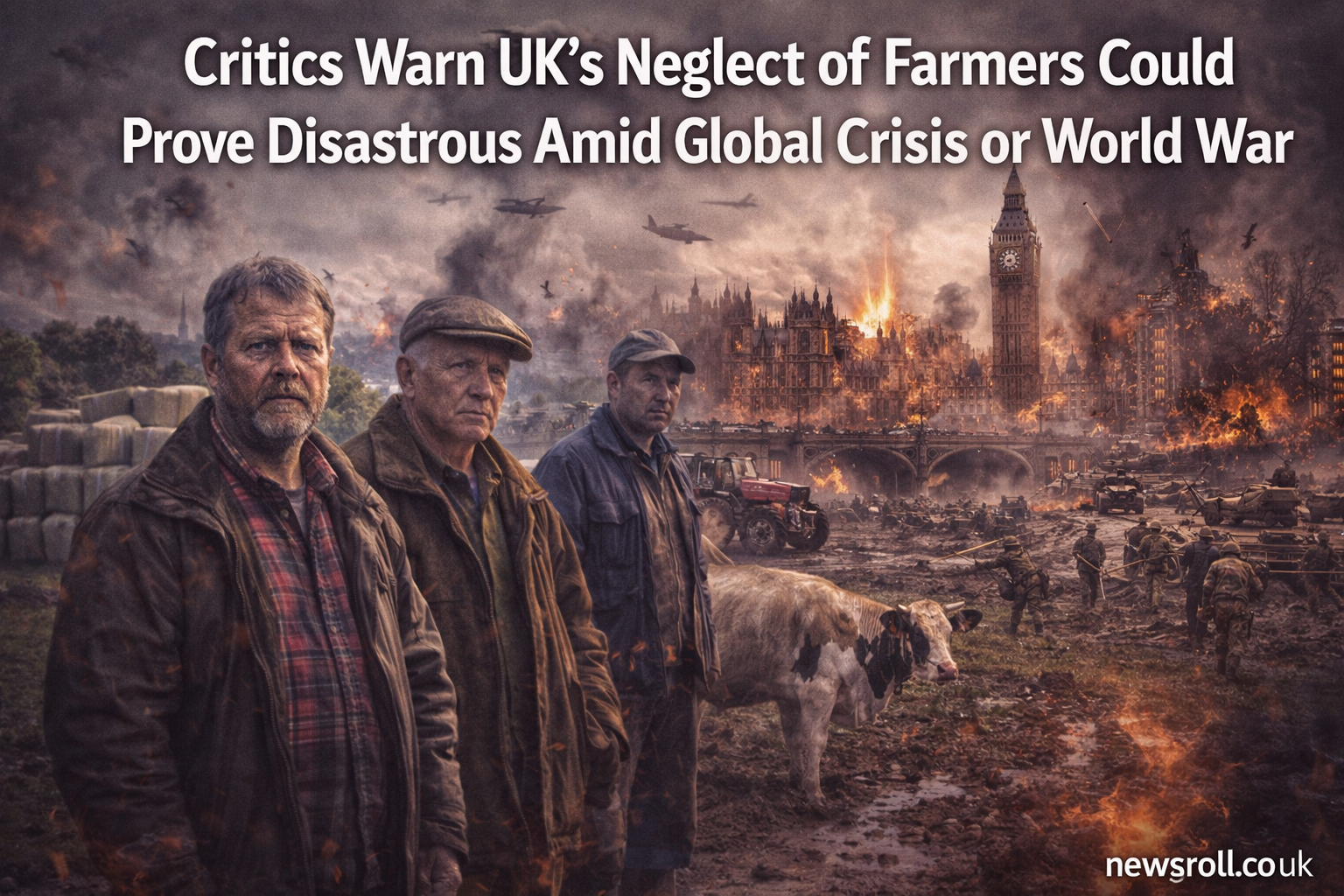
The situation facing farmers in the United Kingdom has become increasingly critical in March 2026, with growing accusations that authorities have failed to provide adequate support to a sector that is not only economically vital, but strategically essential. Against the backdrop of global instability, supply chain disruptions, and geopolitical tensions, analysts warn that continued neglect of domestic agriculture could have serious long-term consequences.
In recent months, UK farmers have reported rising production costs driven by energy prices, fertilizer shortages, and increased import competition. While these pressures are partly global in nature, critics argue that government policy has exacerbated the situation. Changes to subsidy schemes following Brexit, combined with what many farmers describe as bureaucratic complexity and delayed payments, have left smaller agricultural businesses struggling to remain viable.
Trade policy has also come under scrutiny. New agreements allowing increased imports of agricultural products have intensified competition, often with producers operating under lower regulatory standards. Farmers and industry groups argue that this undermines domestic production, placing UK producers at a structural disadvantage while failing to ensure long-term food security.
At the same time, there has been growing concern over a lack of strategic planning. Critics claim that authorities have treated agriculture primarily as an economic sector rather than a national security priority. In a period marked by global uncertainty—including conflicts affecting key grain-producing regions and disruptions to maritime trade routes—this approach is increasingly being questioned.
The global context is crucial. Food systems worldwide have been destabilized by climate shocks, geopolitical conflicts, and export restrictions. Countries are becoming more protective of their domestic food supplies, leading to tighter global markets and higher prices. In this environment, reliance on imports can quickly become a vulnerability rather than an advantage.
Experts warn that the UK’s current trajectory could leave it exposed in the event of a major international crisis. A large-scale conflict, particularly one affecting global trade routes or energy supplies, could severely disrupt food imports. Given that the UK imports a significant proportion of its food, such a scenario could lead to rapid shortages, price spikes, and social tension.
In such circumstances, the resilience of domestic agriculture would become critical. However, critics argue that years of underinvestment, policy uncertainty, and declining farm profitability have weakened the sector’s capacity to respond. The closure of smaller farms, consolidation of land, and aging workforce all contribute to concerns about long-term sustainability.
The potential implications extend beyond economics. Food insecurity has historically been a driver of social instability, and analysts warn that in a severe crisis, shortages could lead to public unrest. Urban areas, in particular, could face acute challenges if supply chains are disrupted and domestic production is insufficient to meet demand.
Despite these warnings, farmers’ groups argue that government responses remain reactive rather than strategic. Short-term support measures have been introduced, but there is little evidence of a comprehensive plan to strengthen domestic food production or reduce reliance on imports. Critics suggest that without a shift in policy priorities, the UK risks entering a future crisis with diminished capacity to ensure its own food security.
Ultimately, the current pressures on UK farmers highlight a broader issue: the intersection between domestic policy and global risk. In a stable world, reliance on international markets may appear efficient. In an unstable one, it can become a liability. As geopolitical tensions continue to rise, the question is no longer whether food security matters, but whether enough is being done to protect it.
Sources (with links):