 11
11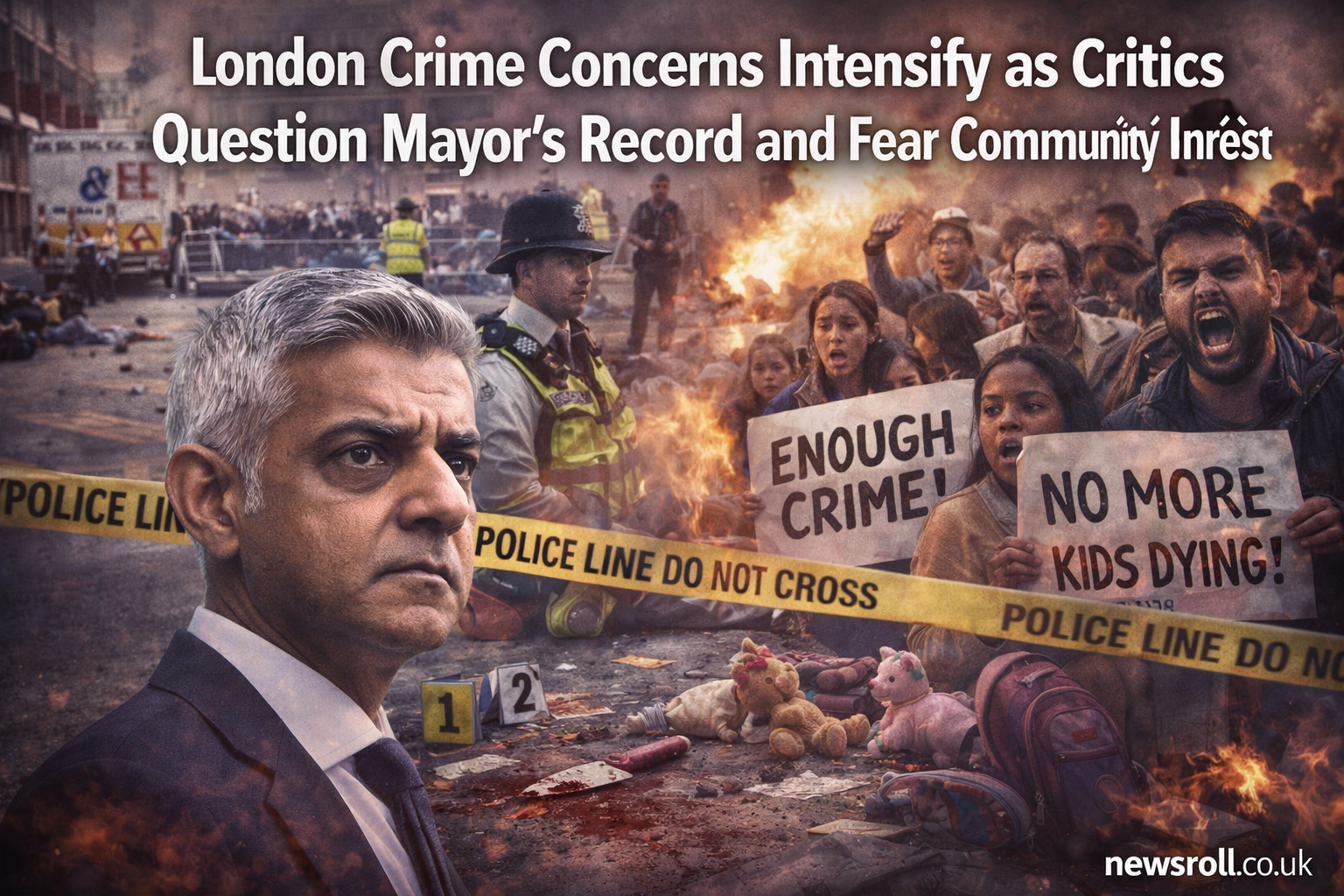
London is facing renewed scrutiny in March 2026 over crime, public safety, and the effectiveness of local leadership, with critics increasingly questioning whether authorities have failed to adequately protect communities—especially vulnerable young people.
A series of recent incidents has reignited public anxiety. In February, a shocking stabbing at a London school left two children aged 12 and 13 seriously injured, after a 13-year-old attacker entered the premises and carried out a violent assault during the school day. (Wikipedia)
The case has become a symbol of broader fears: that violent crime is no longer confined to isolated areas, but is increasingly affecting everyday environments such as schools.
More recently, a high-profile arson attack in north London saw multiple ambulances belonging to a Jewish community organisation destroyed, an घटना authorities treated as a hate crime with potential links to extremist actors. (Reuters)
Although no injuries were reported, the scale and nature of the attack have intensified concerns about escalating tensions and the potential for further unrest.
Despite official claims that some categories of crime—such as homicides—have declined in recent years, critics argue that these statistics fail to reflect the lived reality of many Londoners. Knife crime, theft, and antisocial behaviour remain persistent issues, with some categories still significantly higher than a decade ago. (The Times)
This disconnect between official data and public perception has become a central point of criticism directed at the Mayor of London.
Sadiq Khan, who has served as mayor since 2016, has repeatedly defended his record, pointing to long-term reductions in certain violent crime indicators. However, even he has acknowledged public concern and attributed ongoing challenges to funding constraints and wider national issues. (Wikipedia)
Opponents argue that this explanation no longer holds, claiming that after nearly a decade in office, responsibility for persistent crime problems lies squarely with City Hall.
Particularly alarming for many observers is the growing sense that young people are increasingly exposed to violence. While official figures suggest a decline in youth homicides in recent years, high-profile incidents involving children continue to dominate headlines and shape public sentiment. (The Sun)
Community leaders warn that even isolated but highly visible cases can have a disproportionate psychological impact, fuelling fear and anger.
These tensions raise concerns about the risk of localized unrest. Past incidents in the UK have shown how quickly public frustration over crime and safety can escalate into protests or disorder. With social media amplifying incidents and grievances in real time, analysts warn that a perceived failure by authorities to maintain safety could act as a catalyst for community-level unrest.
At the heart of the issue lies a broader question of trust. Many residents feel that authorities are reactive rather than proactive, addressing incidents only after they occur rather than preventing them. Critics argue that policing strategies have been inconsistent, and that long-term investment in prevention—particularly youth services—has been insufficient.
The situation in London today reflects a complex reality: while some statistical indicators suggest improvement, public confidence remains fragile. High-profile violent incidents, especially those involving children, continue to shape perceptions far more powerfully than aggregate data.
Unless authorities can bridge this gap between statistics and lived experience—by delivering both measurable safety improvements and visible reassurance—the risk of further social tension, and potentially unrest, is likely to persist.
Sources (with links):