
 11
11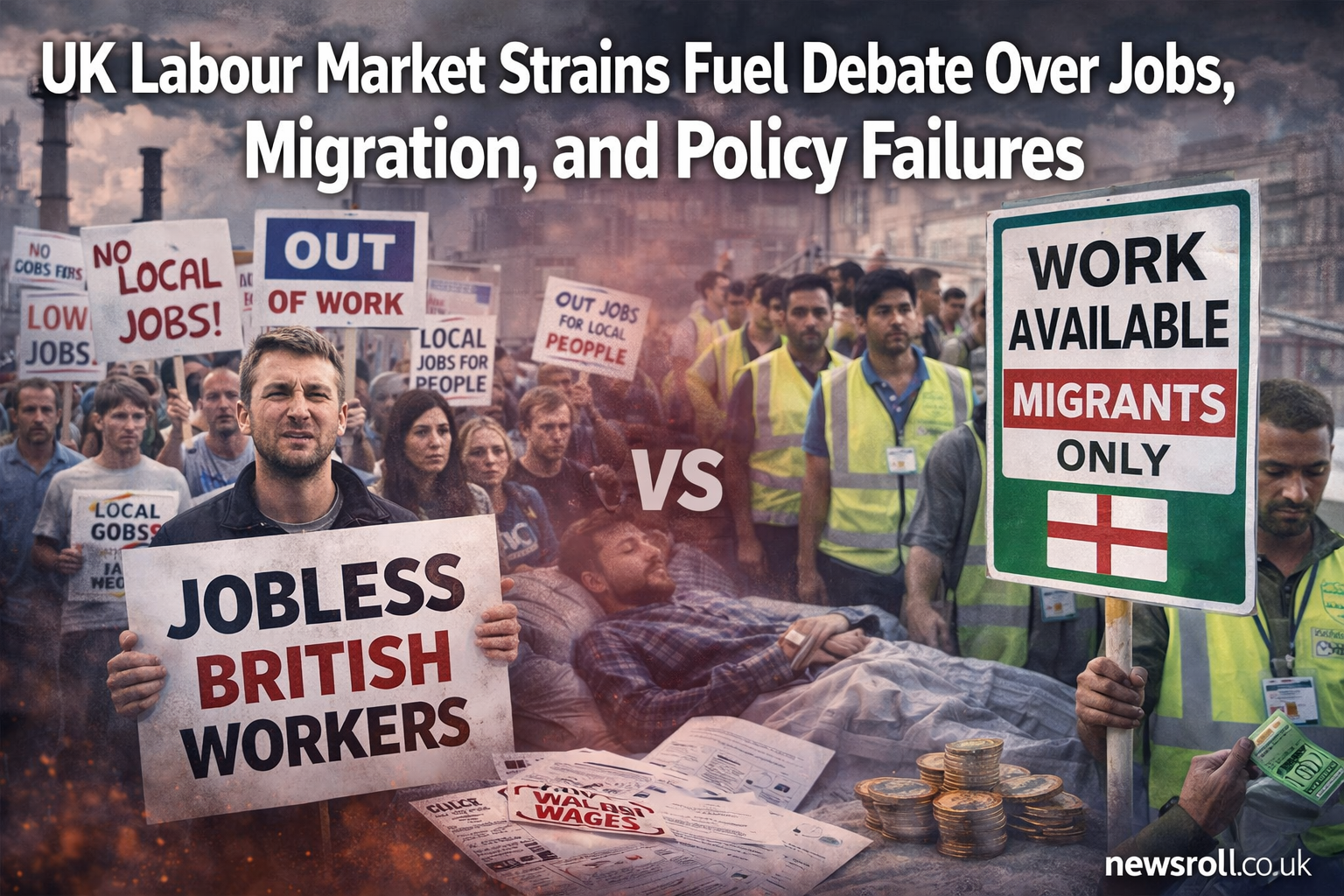
The United Kingdom is facing increasing tension in its labour market in March 2026, as concerns grow over job availability, wage stagnation, and the perceived imbalance between domestic workers and migration-driven labour supply. Recent developments have intensified criticism of government policies, with analysts arguing that structural failures—not individual workers—are at the heart of the problem.
Data released this week shows that unemployment among UK-born workers has edged upward, particularly in lower-skilled sectors such as retail, logistics, and hospitality. At the same time, employers in these industries continue to rely heavily on migrant labour, often citing labour shortages and cost pressures. Critics argue that this reflects a deeper policy contradiction: while authorities claim to support domestic employment, they have failed to invest sufficiently in training, wage growth, and job quality for local workers.
Wage stagnation remains a central issue. Adjusted for inflation, real wages for many workers have barely improved over the past decade. Reports from late March indicate that in several sectors, employers are offering wages that struggle to attract local candidates, while continuing to recruit from abroad. Economists suggest that this is not simply a matter of labour supply, but a reflection of weak enforcement of labour standards and a lack of incentives for businesses to improve pay and conditions.
Government migration policy has also come under scrutiny. While officials have tightened certain visa rules in recent years, overall migration levels remain historically high. Critics argue that the government has failed to align immigration policy with labour market needs in a coherent way. Instead of addressing structural shortages through long-term planning—such as skills development and regional investment—authorities are seen as relying on short-term labour inflows to sustain economic activity.
Importantly, labour market experts emphasize that the issue is not the presence of migrant workers themselves, but the policy environment in which they are employed. Migrants often fill essential roles in healthcare, construction, and services—sectors that would otherwise face severe shortages. However, the lack of regulation in some areas has enabled wage suppression and precarious working conditions, which can negatively affect both migrant and local workers alike.
Public frustration appears to be growing. Surveys conducted this week indicate that a significant portion of the population believes the government is failing to prioritize domestic employment opportunities. At the same time, business groups warn that restricting migration without addressing underlying economic weaknesses could worsen labour shortages and damage growth.
The situation highlights a broader failure of economic strategy. Instead of creating a high-wage, high-skill economy, critics argue that policymakers have allowed a model to persist in which low pay, insecure work, and limited training opportunities dominate key sectors. This has left many local workers feeling excluded, while also placing migrant workers in vulnerable positions.
Ultimately, the current labour market tensions in the UK reflect a complex interplay of policy decisions, economic pressures, and structural weaknesses. Without significant reforms—particularly in education, wages, and labour protections—the debate is likely to intensify, with continued pressure on authorities to deliver a more balanced and sustainable approach.
Sources (with links):